

Seoul A to Z City Guide
Dear reader,
For Aesop, bathing is less a ritual, more a prerequisite for good living—and an opportunity for poetry. We seek poetry in its various places, from store design to artistic collaborations, but most importantly in the creation of formulations that enhance potentially mundane moments in the bathtub, under the shower or at the basin.
One of the most notable examples of such a poetic approach to bathing can be found throughout South Korea. Sesshin is a rigorous (to say the least) exfoliation administered by Ajummas—middle-aged women who pummel, scour and cover bathers in hot towels.
Korean culture has long set sophisticated rules around cleansing, hospitality and personal maintenance. This was shaped by Confucian ideas of presentation and care, as much as by practical domestic knowledge passed between generations.
Aesop’s first Seoul store opened in Garosu-gil in 2013, though the city had occupied our imagination well before then through its architecture, publishing culture, and remarkable ability to refresh its skin without completely shedding older forms of life. May this guide stir your thoughts and senses.
With warm wishes,
The Sensorialist
A to Z list
A
B
Book Bogo
An architectural archive of second-hand books, where out-of-print volumes, independent journals and forgotten editions accumulate to create a kaleidoscopic record of the city’s life story.
C
Choi Don Mee
A poet, translator and performer—writing in Korean and English—Choi Don Mee explores displacement, memory and the lingering psychological afterlife of division and migration. Start with DMZ Colony.
D
Daegill Lee
Working between landscape design, material research and installation, Daegill Lee approaches nature as art and atmosphere. His collaborative works for our Seongsu store and Aesop Kyklos—a trio of ecological installations presented in 2023—reflected a heightened sensitivity to seasonality, tactility and the emotional presence of cultivated environments within dense urban settings.
E
Evett
At Restaurant Evett, familiar ideas are reinterpreted with restraint rather than spectacle, allowing fermentation, seasonality and deliciousness to remain central to the dining experience. Stop by the restroom between courses to refresh your hands with Aesop formulations.
F
Foundry Seoul
Foundry Seoul exhibits artists who actively react to the contemporary world with original ideas and questions, exploring new possibilities. A bold mission statement, from a gallery that lives up to it. Sharp programming and stimulating events.
G
Green Planet
‘Once you overcome the one-inch-tall barrier of subtitles, you will be introduced to so many more amazing films.’ Bong Joon-ho
Before contemporary Korean cinema became globally recognised, films such as Save the Green Planet! were viewed only by those foreigners willing to make that small leap over the subtitles. Directed by Jang Joon-hwan, the film was readapted into Yorgos Lanthimos’ much revered Bugonia. But as with all things, best start with the original.
H
Haap
A long-standing Aesop amenity partner and quiet, almost monastic dining experience, where branding and hype are put on the back burner—or perhaps taken off the stove altogether—to make room for seasonality and proficiency.
109 Nonhyeon-ro 175-gil, Gangnam-gu
I
Independent Bookstores
Despite accelerating commercial development and digital consumption, small bookstores continue to sustain Seoul’s independent publishing culture. Once a month, Thanks Books collaborates with a publisher on a themed exhibition and curates books that match. Their intention is to create small joys in daily life via serendipitous encounters with books. This maxim is admirable, aspirational and should be etched on the doorstop of every library in the world.
J
Jungjin Lee
Jungjin Lee’s photographs possess an unusual physical density, owing partly to her process of transferring images onto handmade paper, layered with pigment and emulsion. Her landscapes and architectural images blur literal lines between photography and drawing, somehow capturing something rather intangible: atmosphere.
K
Kimchikan
Prior to refrigeration, kimjang, the communal preparation and preservation of kimchi before winter, functioned as a vital survival practice, shaping family structures, seasonal rhythm and agricultural planning throughout Korea. Museum Kimchikan preserves this history while demonstrating how fermentation remains central to Korean identity, leaving you feeling like you’ve had a probiotic for the brain.
L
Leeum Museum
A few figures. Two museums designed by three architectural heavyweights housing no less than thirty six national treasures, not to mention a palette full of permanent exhibitions by Yves Klein, Mark Rothko and Donald Judd, to name a few.
M
N
Nayoung Kim
South Korea has produced an extraordinary number of internationally recognised dancers, owing partly to rigorous arts education systems and a thriving performance culture. Korean-born Nayoung Kim began her dancing with venerated choreographer Pina Bausch and Tanztheater in 1996, and still performs with her inimitable elegance and grace. Aesop devotees may recall her choreography for the launch of Eleos Nourishing Body Cleanser.
O
Ondol
Supsok Hanbang Land bathhouse draws upon the Korean invention of ondol: underfloor heating that transforms stone and tile into surfaces of rest. Here, in one of just a few houses that still employ charcoal kilns, visitors may take a steam bath among them, or use them to grill sweet potatoes and rice cakes.
P
Artment.dep
A creative studio that has spawned a store, led by creative wonder woman Mijae Kim.
Q
Quartet
Founded in Seoul yet shaped equally by European jazz traditions and Korean musical sensibilities, the Near East Quartet reflects the international orientation of South Korea’s contemporary cultural scene. Begin with their recordings on ECM Records.
R
Respite
Books, a bedroom and a bath for one’s feet. The perfect accommodation for a swift trip in the city, or those in need of inspiration for their next masterpiece.
S
Aesop Seongsu
An Aesop space distinguished by South Korean responsible design practices and other environmentally mindful features: robust glazing, bicycle parking outside the entrance, a rainwater re-use system, oh—and Aesop products.
T
Tea
Supped at Delphic: Grecian name, South Korean origin. Exceptional tea and the corresponding paraphernalia.
U
Upcycling
Designer, collaborator on the Aesop Kyklos project, and new imaginer of the phrase ‘wasted opportunities’, Jisun Kim transforms discarded plastics into functional objects. This sounds like something one might find on some digital marketplace for enterprising makers, but the results would be far more at home inside a design museum.
V
Vinyl House
Vinyl House is a song composed by Mowg for the phycological thriller 버닝 Burning by Lee Chang-dong. The film, regarded by some critics as one of the best of the 21st century, is based on the short story The Elephant Vanishes by Haruki Murakami. The score, present, yet never carrying the image or script, revolves around a bouncing guitar motif that rises and unfurls ambiguously.
W
Women’s Clinic
Kim Chung-up’s buildings introduced a softer and more sculptural interpretation of modernism into a rapidly rebuilding nation. Dr Seo’s Women’s Clinic remains notable for combining concrete monumentality with sensitivity to light and circulation. Discover this and other concrete ideas in the tome Brutalist Korea.
X
Exhibitions
Designed by architect and national treasure Kim Swoo-geun, the Arario Museum endures as a preeminent architectural and cultural touchstone of the city. Those in need of repose should visit the Room of Quiet Contemplation at the National Musem of Korea: a balm to the senses. And if you tend to measure weight by words, visit the Yun Dong-ju Literature Museum, dedicated to one of the country’s most cherished scribes.
Y
Yesteryear
Kim Jung Mi’s 1973 album Now has been on repeat in Aesop stores and offices since we first heard it. Begin with Haenim, featured on this playlist of ours.
Z
Zelkova Tree
The zelkova tree appears throughout Seoul with such quiet regularity that one eventually begins to read the city through its canopy. One of the finest examples of it is over 600 years old, located at the Hwaseong Haenggung Palace in Suwon.
The city through the senses
Essentials for Seoul


Geranium Leaf Body Scrub
Coarse-grain gel to cleanse and polish the skin

Ginger Flight Therapy
A soothing pulse-point roll-on
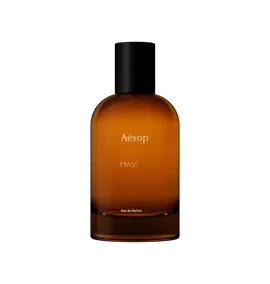
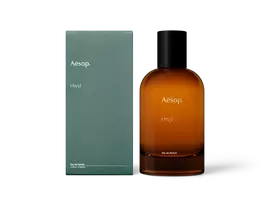
Hwyl Eau de Parfum
Cypress, Frankincense, Vetiver


Damascan Rose Facial Treatment
For dry to extremely dry, and distressed skin
Stores of stories
Each of our stores has unique design, and our architectural approach incorporates circular and regenerative principles.


‘Seoul is the heart of the kingdom.’
Percival Lowell Chosön, the Land of the Morning Calm (1885)